
Introduction
After a few weeks of shooting with club equipment, most archers will start to think about buying their own bow, arrows and other equipment. For visually impaired archers, bows and arrows are the same as those used by sighted archers. There is no requirement for specialist or adapted bows, limbs or arrows simply because an archer is visually impaired.
Most VI archers use standard risers, limbs, strings, arrows, stabilisers and accessories, selected in exactly the same way as any other archer – based on draw length, draw weight, shooting style and personal preference.

Before purchasing equipment, we strongly recommend seeking advice from an experienced coach or archer and visiting a local archery shop where possible. You should shoot the actual bow and arrows you are considering buying, as this helps ensure correct fit and performance. Buying equipment online without trying it first is generally not recommended, particularly for new archers.
Arrows and Fletchings
Whilst the arrows used are the same for VI and any other archers, there are options that might help.
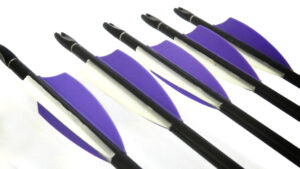
It is most common to see the use of 3 fletchings on each arrow: 1 cock fletching, and 2 hen fletchings.
Fletchings are available in a number of different styles, sizes, materials and colours.
Usually the cock fletching is a different colour to the others to help the archer correctly orientate their arrows.
Depending on the user’s vision, using a bright colour or highly contrasting cock fletching may help.
Another option is the use of 4 fletchings, making the arrow symmetrical, so the orientation of the arrow is less important.
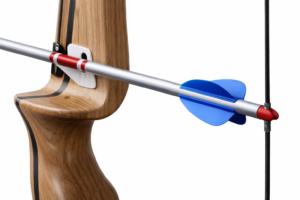
The nock on the arrow may also have a marking, known as an indicator nock. This may also provide a tactile indication of the rotation of the arrow.
Specialist and Adapted Equipment for VI Archers
While bows and arrows themselves are standard, some visually impaired archers may require additional or adapted equipment to assist with aiming and consistency. This equipment is specific to sight classification and shooting method and must comply with the rules.
Some specialist equipment may be available “off the shelf”, while other items may be adapted or custom-made. It is important that any such equipment is:
- compliant with the rules
- portable and robust
- stable and fit for purpose
Equipment that does not meet these requirements may introduce inconsistencies between shots and negatively affect performance.
The BBS Archery Shop can provide advice on specialist equipment available to VI archers. Most items may be purchased from the shop, but there is no obligation to do so.
We recommend that you obtain your BBS sight classification for archery before purchasing any VI-specific specialist equipment, as this may affect what equipment you need—or are permitted—to use.
Foot Markers
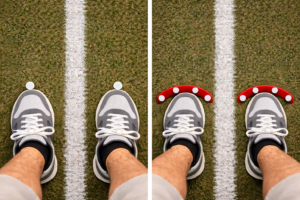
All archers (VI or sighted) benefit from standing in the same position during every shot. This can be achieved by using “foot markers”. These can be as simple as target pins or something more visible like a plastic “horseshoe” style marker. These markers can be pinned to the ground for outdoor use or attached to a small mat or taped down for indoor use.
Bow Sight or Adapted Bow Sight

Many VI archers have some usable vision and can shoot using a bow sight or an adapted bow sight. Archers are encouraged to make the best use of any vision they have.
The Archery GB Rules of Shooting (Part 11) explain the permitted variations for visually impaired archers.
AGB Rules of Shooting Part 11 (you will need to search for Rules of Shooting) (opens in new window)
Examples of adaptions include the use of contrasting sight pins, different sized sight pins, lenses, prisms, magnification.
Please note that in competitions that are record status or have VI-specific categories, archers with a sight classification of B4 or B5 may be required to use a bow sight, which may be modified.
If you can’t use a bow sight, you may require tactile sighting aids.
Tactile Equipment
For people with limited or no vision an alternative sighting method is needed. A number of ideas have been tried but the tactile “back of the hand” method is recommended and the only one accepted under most rules. Please note that in competitions that are record status or have VI specific categories, archers with a sight classification of B1, B2 or B3 may be required to use a tactile sight.
Most common components of tactile equipment are:
- a set of foot-locators
- a tripod or stand
- a tactile sight
Some rules put limits/restrictions on the size and parts of the tactile equipment, so please check these or ask for advice before making or buying any specialist equipment.
“Back of the hand” sighting method
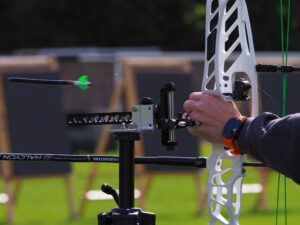
In brief, the “back of the hand” tactile sighting method replaces an optical sight with a tactile pointer mounted on a stand or tripod that contacts the back of the archers bow hand giving a reference for direction and elevation.
Foot Locators
Foot locators help the archer stand in a consistent place and help the archer find the left/right direction in relation to the target.
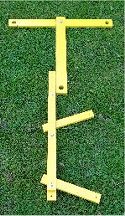
Tripod or Stand
A stand or tripod is connected to the foot locators. This provides a height adjustable platform for mounting the “back of the hand” tactile sight.
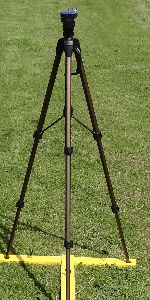
A video tripod is a good choice. They are robust and provides the required height to be achieved, and are adjustable.
Tactile Sight
The back of the archer’s hand that holds the bow makes contact with the end of the tactile sight and this reference point is how information on the height the archer needs to shoot at is communicated to the archer.
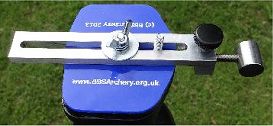
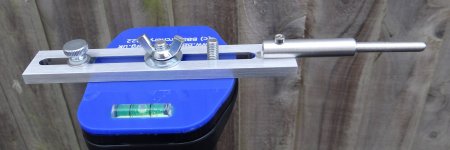
A number of devices can be used as the point of contact with the back of the archer’s hand, however it does need to be robust.
BBS Archery Equipment Shop
BBS Archery offer ready made foot locators and/or can provide detailed plans and diagrams (if you have someone that can make them for you). We also offer several different types of tactile sights and a modified tripod on which to mount them.